
President Holds Special Discussion with Maha Sangha; Announces Committee to Amend Prison Regulations Concerning Monks
President Anura Kumara Dissanayake announced that a special committee will be appointed to review and recommend amendments to current prison laws, standing orders, and regulations regarding how Buddhist monks are held in prison and escorted outside prison premises.
Speaking at a special meeting with members of the Maha Sangha held at the Presidential Secretariat today (08), the President stated that the committee will comprise representatives from the Attorney General’s Department, the Ministry of Justice, the Ministry of Public Administration, the Ministry of Buddhasasana and Religious Affairs, prison officials, and the Commissioner General of Prisons. The committee will be tasked with submitting proposed amendments within two weeks. The President assured that any provisions directly affecting the clergy will be finalized in consultation with the Maha Sangha.
President Dissanayake emphasized that he is not prepared to issue arbitrary orders for individuals while existing laws are in place. He stressed that if existing laws are outdated or unsuitable for the present day, the correct course of action is to amend the law properly rather than letting individual executive preference dictate legal enforcement.
The meeting was convened following a letter addressed to the Commissioner General of Prisons by the Mahanayake Theros regarding the incident where Ven. Galagoda Aththe Gnanasara Thero was produced before court in lay clothes after removing his saffron robe, which had drawn significant public attention and discussion.
Explaining the legal framework governing prisons, President Dissanayake noted:
“The current prison administration is governed by the Prisons Ordinance enacted in 1877, which has been amended from time to time. Under Section 94 of the Ordinance, the Minister is empowered to issue regulations, with the latest amendments made in 2022. Additionally, the Commissioner General of Prisons is authorized to issue Standing Orders subject to the Minister’s approval. Thus, the prison system is governed by the Act, Ministerial regulations, and Standing Orders.
With very few exceptions, these rules focus primarily on general inmates. Only Regulation 216 specifically refers to Buddhist monks. Consequently, special regulations tailored for monks or other religious leaders were not established, as rules were created focusing on the general inmate population.
Inmates fall into two main categories: remand suspects (those not convicted by a court) and convicted prisoners. This issue does not arise regarding monks held on remand. However, once convicted, inmates are categorized into rigorous or simple imprisonment. While those serving simple imprisonment may choose their clothing with the consent of the prison superintendent, those under rigorous imprisonment must wear the designated prison attire according to existing law.
The issue highlighted by the Mahanayake Theros arises mainly when convicted monks are escorted outside prison premises. Whether taken for court proceedings or other matters, exposure to the media and the public occurs outside the closed environment of the prison. Prison officials followed the standard procedures currently in place. Out of 63 monks currently serving sentences, those summoned for other ongoing cases have previously been produced before court without robes in accordance with existing rules. Prison officials acted strictly according to existing law, so blaming them is unwarranted.
I acknowledge that seeing a revered monk in a different appearance causes deep shock and dismay to the Maha Sangha and the Buddhist public. However, laws are not unchangeable historical artifacts; they evolve over time. Rather than overriding the law with personal directives—which would substitute personal preference for the rule of law—the appropriate step is to update regulations and standing orders to reflect current realities. This needs to be a systematic reform applicable to the entire system rather than an ad-hoc decision targeting a single individual.”
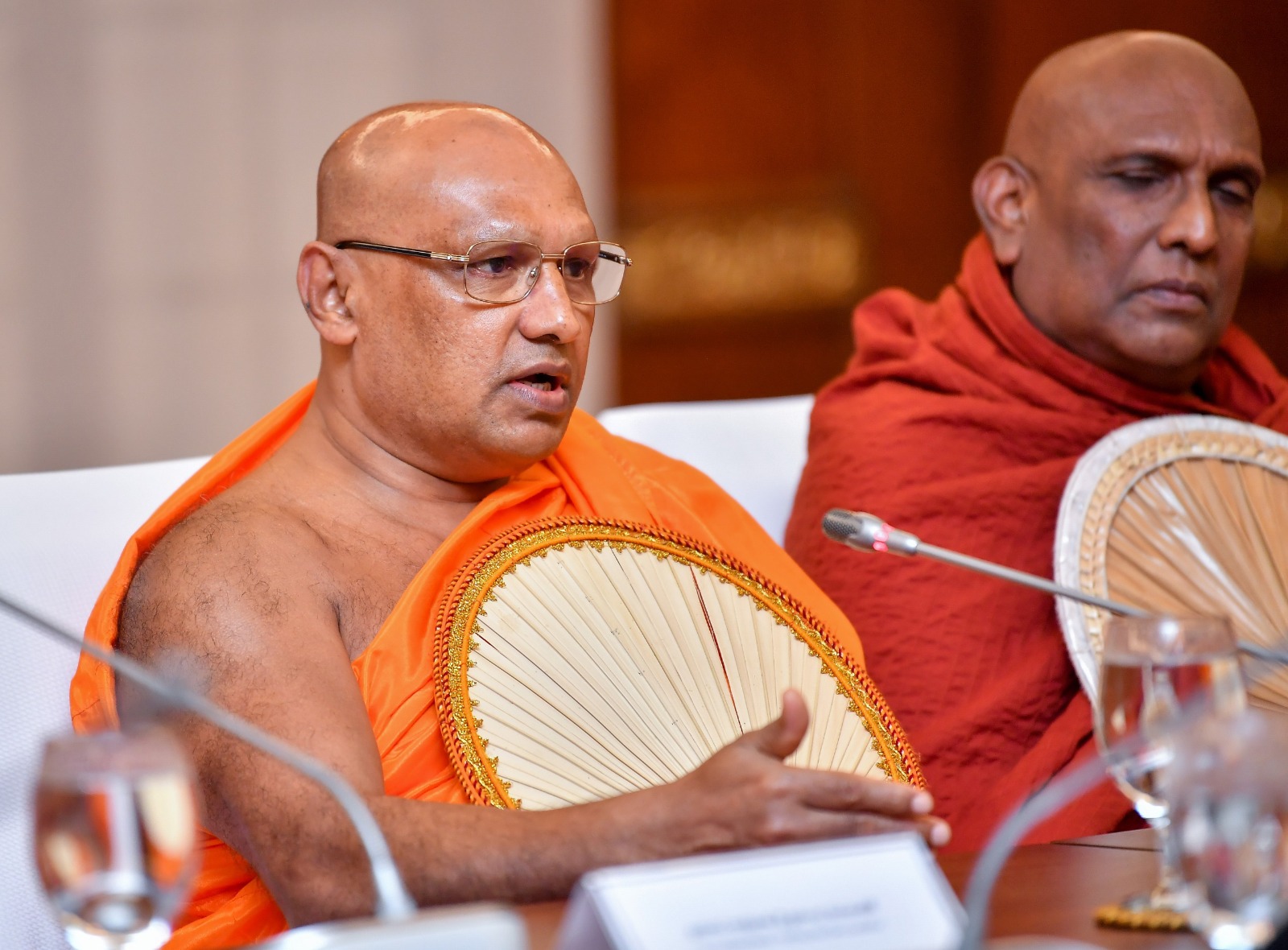
The Venerable Maha Sangha present at the meeting expressed their gratitude and blessings to the President for addressing these sensitive matters and taking prompt steps toward a structured solution.
The meeting was attended by senior prelates representing all four chapters, including Ven. Narampanawa Ananda Anunayake Thero of the Asgiriya Chapter, Ven. Pahamune Sri Sumangala Lekhakadhikari Thero of the Malwatte Chapter, Ven. Mahawela Sri Rathanapala Deputy Lekhakadhikari Thero, Ven. Balapitiye Siriseevali Lekhakadhikari Thero of the Sri Lanka Amarapura Maha Nikaya, Ven. Ahangama Maithreemurthi Deputy Lekhakadhikari Thero, Ven. Attangane Sasanarathana Lekhakadhikari Thero of the Sri Lanka Ramannya Maha Nikaya, and Ven. Kongastanne Ananda Thero.
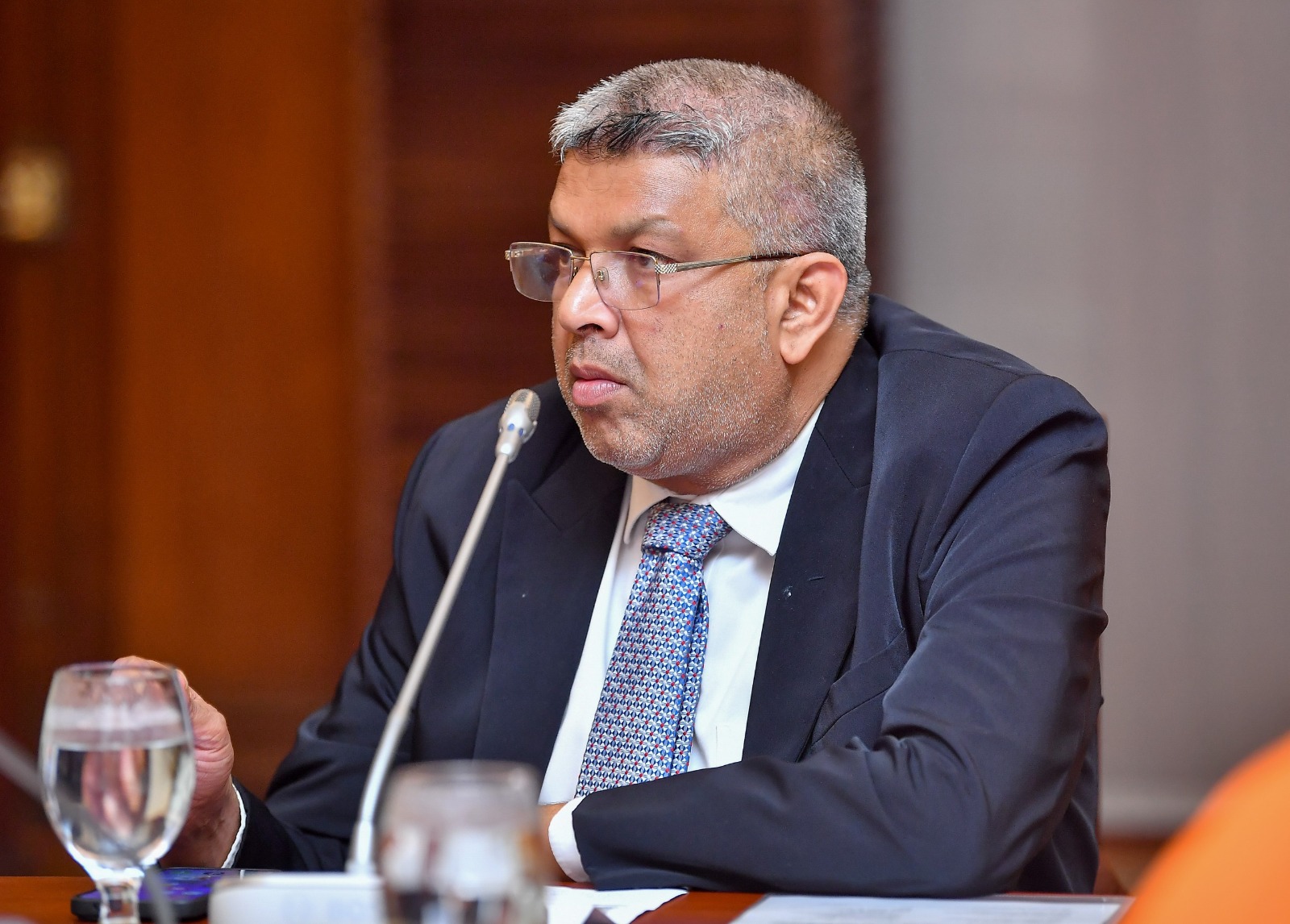
Minister of Buddhasasana, Religious and Cultural Affairs Dr. Hiniduma Sunil Senevi and Minister of Justice and National Integration Attorney-at-Law Harshana Nanayakkara were also present at the discussion.




Views: 0
