
The Disgusting Lying of Sri Lankan Politicians
By Adolf
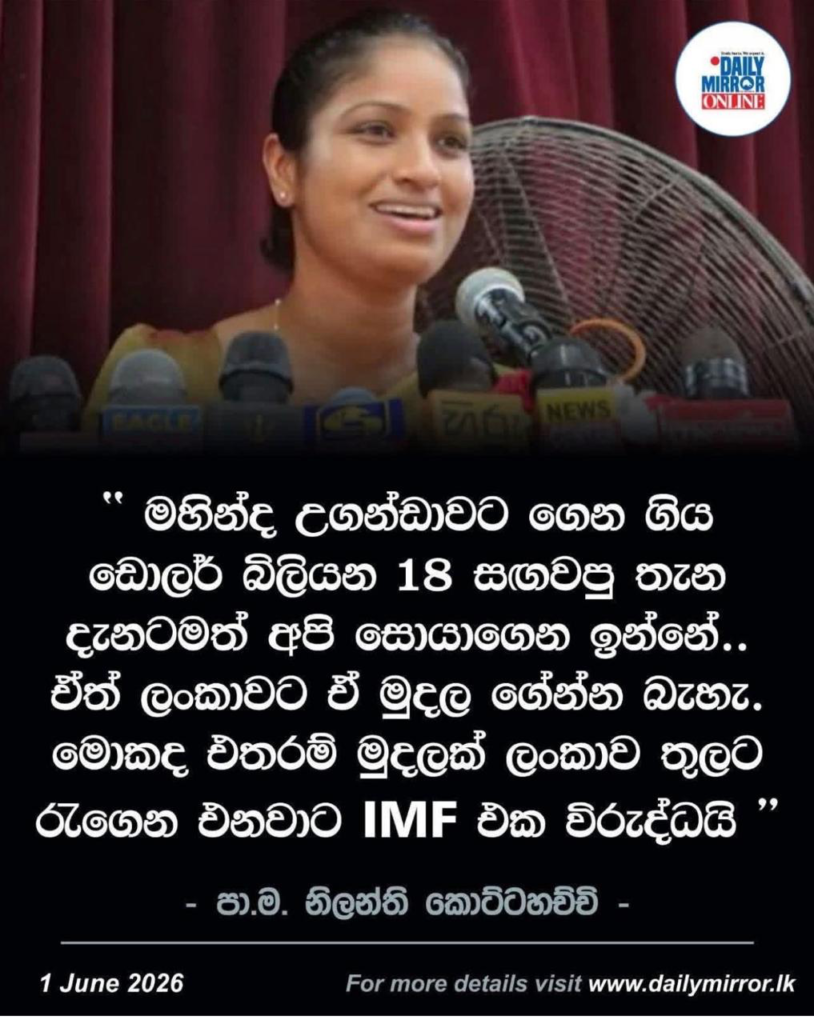
What Disgusting and Shameful lying by this MP?
Sri Lankan politics has long been plagued by a culture of promises that are made with great conviction during election campaigns and quietly abandoned once power is secured. While every political party has been guilty of this practice at some point, the current administration came to power on the back of promises that created enormous expectations among a frustrated and struggling population.
The National People’s Power (NPP) movement successfully convinced many Sri Lankans that it represented a new political culture. Its leaders presented themselves as different from the traditional political establishment and promised a government that would prioritize honesty, accountability, and integrity. President Anura Kumara Dissanayake, a gifted and persuasive Sinhala orator, connected with voters who were desperate for change after years of economic hardship and political disappointment.
Many citizens believed promises that the cost of living would fall significantly, that electricity, medicine with no vat and fuel prices would be reduced, and that the tax burden on ordinary people would ease. These assurances resonated strongly with a public battered by inflation, declining incomes, and economic uncertainty. However, the reality experienced by many households today is very different. Living costs remain high, taxes continue to weigh heavily on citizens and businesses, and many families feel that their financial struggles have not eased.
Perhaps the greatest promise of all was the commitment to eradicate corruption. The public was told that a new era of transparency and accountability would begin. Yet many observers argue that the government’s anti-corruption efforts have focused disproportionately on past controversies rather than addressing concerns about governance and accountability within the current administration. Critics contend that investigations often appear selective, raising questions about whether justice is being pursued consistently or politically. For example the coal tender , containers slipping through customs, oil tender to name a few.
The concern extends beyond any individual case or institution. When political leaders repeatedly make promises that are impossible or unlikely to be fulfilled, public trust is eroded. Citizens become increasingly cynical about politics, government institutions, and democratic processes. The damage is particularly severe among younger generations who are watching closely and learning important lessons about leadership and public conduct.
Young people deserve examples of honesty, responsibility, and accountability from those who occupy the highest offices in the land. When politicians routinely make exaggerated claims or promises they cannot keep, it sends a dangerous message that success can be achieved through rhetoric rather than results. A society cannot thrive when truth becomes secondary to political expediency.
Compounding the problem is the weakness of the opposition. Sri Lanka desperately needs a credible and principled opposition capable of holding governments accountable and presenting realistic alternatives. Unfortunately, many opposition figures carry political baggage of their own, making it difficult for them to effectively challenge the government’s shortcomings.
Sri Lanka’s future depends on restoring honesty to public life. Political leaders must recognize that trust, once lost, is difficult to regain. The country needs fewer slogans, fewer unrealistic promises, and far more candour about the challenges that lie ahead. Only then can Sri Lanka begin to rebuild confidence in its democratic institutions and political leadership.
The post The Disgusting Lying of Sri Lankan Politicians appeared first on LNW Lanka News Web.
